
Table of Contents
Introduction in Computer Starting But No Display Issue.
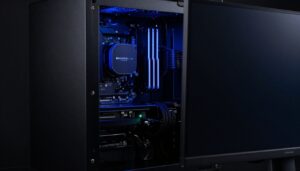
Your computer hums to life. Fans whir, lights glow on the case. But the monitor stays black. No welcome screen, no boot-up logo. This nightmare hits many users. It feels like the system teases you with power but hides its face. Don’t panic. This guide walks you through fixes step by step. You’ll pinpoint the issue and get back to work fast.
Section 1: Initial Triage – Quick Fixes You Can Do Right Now
Start here. These steps tackle the easy stuff first. Most no display problems stem from simple oversights. You’ll save time and avoid deeper dives.
Checking Power and Monitor Connections
Power issues top the list for black screens. Check the monitor’s power cord first. Plug it into a wall outlet or surge protector. Make sure it’s firm.
Next, inspect the video cable. HDMI, DisplayPort, or DVI? Tug gently to ensure it’s seated. Loose connections block signals.
Set the monitor to the right input. Use the buttons on the side or bottom. Cycle through options like HDMI-1 or PC.
Test the monitor elsewhere. Hook it to a laptop. If it works, your PC’s output is the problem. If not, the display might need repair.
Swap cables too. A bad one can mimic a full failure. These checks fix 30% of cases right away.
The Hard Reset and Peripheral Disconnection Protocol
A quick reset clears glitches. Unplug the power cord from the wall. Hold the PC’s power button for 30 seconds. This drains residual power.
Wait two minutes. Plug back in and start up. Sometimes, static builds up and blocks display.
Now, strip it down. Unplug all extras. Remove USB drives, printers, extra hard drives. Keep only keyboard, mouse, and monitor.
Boot again. If the screen lights up, add devices one by one. A faulty peripheral could cause the blackout.
This method resets without tools. It solves conflicts from bad ports or surges.
Verifying Display Output Selection (Integrated vs. Dedicated GPU)
Many PCs have two video options. Integrated graphics sit on the motherboard. Dedicated GPUs slot into the case.
Plug your monitor into the wrong port? No wonder it’s blank. For dedicated cards, use the card’s ports.
No output? Switch to the motherboard’s HDMI or DisplayPort. Remove the GPU cable first.
Power on. If display appears, the dedicated card needs attention. Update its drivers later if needed.
Users with laptops often face this too. External monitors require the right port selection in settings. Double-check your setup.
Section 2: Diagnosing RAM and Internal Hardware Seating Issues
Hardware slips happen. Dust or bumps loosen parts. Focus on RAM and cards now. These cause POST failures without crashes.
Understanding POST Codes and Beep Sequences
Every boot runs a Power-On Self-Test. POST checks key parts like CPU and memory. Failure means no display.
Listen for beeps. They signal errors. One long beep? RAM issue often.
Patterns differ. AMI BIOS uses short beeps for graphics faults. Award does three for base memory.
No beeps at all? Check speaker connections. Motherboards have a small one inside.
Look for LED codes too. Some boards flash lights or show numbers. Consult your manual for meanings.
These clues narrow it down fast. Ignore them, and you’ll chase ghosts.
Reseating RAM Modules Correctly
Open the case. Ground yourself with a wrist strap or touch metal. Static zaps components.
Find the RAM sticks. Tall modules near the CPU. Push clips on both ends to release.
Pull straight up. Hold by edges. Inspect gold contacts for dirt.
Clean if needed. Use a soft eraser on contacts. Avoid liquids.
Insert one stick into the primary slot. Marked as Slot 1 or A1. Push until clips snap.
Boot up. No display? Try another stick or slot. Faulty RAM kills output every time.
Test each module alone. This isolates the bad one. Replace if it fails.
Checking Graphics Card and Peripheral Seating
Graphics cards demand firm fits. Power off and unplug. Open the side panel.
Release the PCIe latch. Pull the GPU by its bracket. No force.
Check for dust in the slot. Blow gently with canned air.
Slide it back in. Align the gold fingers. Press until it clicks.
Connect power cables. 6-pin or 8-pin from PSU? Ensure they’re snug.
Other cards like sound or Wi-Fi? Reseat them too. Loose ones disrupt the whole system.
Start the PC. Fans spin but still black? Move to next steps.
Section 3: BIOS/UEFI Configuration Errors and CMOS Reset
Settings glitches hide in firmware. A bad update or tweak blocks display. Reset them to default.
Forcing a CMOS Reset (Jumper vs. Battery Removal)
BIOS holds configs. Wrong memory speed? No boot screen.
Find the CMOS jumper. On the board, near battery. Labeled CLR_CMOS or similar.
Move the jumper cap from pins 1-2 to 2-3 for five seconds. Then back.
No jumper? Pull the coin battery. Silver circle by edges. Wait five minutes.
Replace and boot. Settings revert. Display should return if this was the issue.
Grab your manual. Pin locations vary by board. ASUS or Gigabyte? Check online if lost.
This fix undoes overclocks or failed updates. Safe and quick.
Troubleshooting Overclocking Failures
Pushed your CPU too hard? Instability hits POST. Screen stays dark.
Overclocks boost speed but risk crashes. RAM timings off? Same problem.
CMOS reset clears it all. Defaults are stable.
Recent tweak? Note what you changed. Avoid it next time.
Stable overclocks need good cooling. Hot CPU fails silently.
If reset works, enter BIOS. Press Del or F2 at startup. Set safe speeds.
Many gamers face this after new parts. Dial back for reliability.
Section 4: Advanced Graphics Troubleshooting and Component Failure
Deeper issues lurk. Test graphics hard. Rule out power or core failures.
Testing with Integrated Graphics (If Available)
Your CPU might have built-in video. Remove the dedicated GPU.
Unplug its power. Release latch. Lift out carefully.
Connect monitor to motherboard port. HDMI usually works.
Power on. Screen shows? GPU is bad. Could be dead or loose power.
No integrated? Borrow a basic card. Test to confirm.
This swap isolates the problem. Saves buying new parts blind.
Laptops with discrete graphics? Use external dock tests if possible.
Identifying Potential PSU Insufficiency
PSUs fade over time. They spin fans but starve the GPU.
High-demand boot needs steady volts. Weak PSU drops out.
Upgraded to a beefy RTX card? Old 500W unit might buckle.
Signs include flickering lights or random reboots.
Test with a multimeter? Advanced users only. Or swap PSUs.
Buy a quality one. 80+ Bronze rating at least. Match your build’s watts.
Real case: User adds 3080 to old rig. Black screen. New 750W fixes it.
Diagnosing CPU or Motherboard Failure Symptoms
CPU dead? No fans even. Or instant shutoff.
No POST beeps? Possible culprit. But check power first.
Motherboard fails show dead USB ports. Or no power light.
Overheating scars? Brown spots mean replacement.
These are rare. Rule out RAM and GPU first.
Symptoms overlap. Use minimal setup: CPU, one RAM, board, PSU.
Still nothing? Pro shop time. They have tools for deep tests.
Conclusion: Next Steps When All Else Fails
You started with cables and connections. Moved to RAM seats and resets. Checked graphics and power. Now, recap the path: basics first, then hardware, configs last.
Most fixes land in early sections. No display often means loose bits or settings slips.
If stuck, draw a flowchart. Test monitor? Yes, next cables. No, replace it.
Persist? Seek help. Forums like Reddit’s r/techsupport shine. Or local repair.
Component swaps confirm faults. Borrow from friends.
Systematic checks win. Your PC will light up soon. Stay patient; you’ve got this.
Computer Starting But No Display Computer Starting But No Display Computer Starting But No Display Computer Starting But No Display Computer Starting But No Display Computer Starting But No Display Computer Starting But No Display Computer Starting But No Display Computer Starting But No Display Computer Starting But No Display Computer Starting But No Display
Computer Starting But No Display Computer Starting But No Display Computer Starting But No Display Computer Starting But No Display Computer Starting But No Display Computer Starting But No Display Computer Starting But No Display Computer Starting But No Display Computer Starting But No Display Computer Starting But No Display Computer Starting But No Display